Africanis: Meet Southern Africa’s Remarkable Indigenous Dog
Discover the Africanis, Southern Africa’s resilient indigenous landrace dog, from its rich heritage and traits to care, training and life as a companion.
1. Introduction: What Is an Africanis?
Introduction: What Is an Africanis?
Some dogs are shaped in show rings. Others are shaped by the landscapes and people they have lived alongside for generations. The Africanis belongs firmly in the second group.
The Africanis is an indigenous landrace dog of southern Africa, with deep roots in rural communities, villages and settlements across the region. Rather than being created through recent, tightly controlled pedigree breeding, these dogs developed over centuries through their close working relationship with people. They helped guard homes, accompanied families, moved with livestock and adapted to demanding local conditions.
That history has produced a dog valued for more than its appearance. Africanis dogs are often admired for their athletic, lean build, sharp awareness and practical intelligence. They tend to be agile, resilient and well suited to an active life, while many also form strong bonds with the people they know and trust. Their growing visibility has drawn interest from dog lovers who want a companion with both character and a meaningful cultural heritage.
Still, Africanis is not a single uniform “look” in the way many modern pedigree breeds are. Individual dogs can vary in coat color, ear shape, size and markings. What connects them is their regional heritage and the natural qualities that helped them thrive alongside southern African communities.
In this article, we will explore where the Africanis comes from, what it typically looks like and what life with one may be like. We will also cover temperament, exercise, training, everyday healthcare and common online questions, including confusing search terms and mixed-breed labels. Whether you are considering adoption or simply curious about this remarkable dog, the Africanis offers a fascinating living link to southern Africa’s history.
2. A Living History of Southern Africa
A Living History of Southern Africa
The Africanis is best understood as a landrace, not a modern breed shaped primarily through tightly controlled pedigree records and show-ring standards. A landrace develops gradually within a particular region, influenced by its environment, the work it performs and the people who live alongside it. Over many generations, dogs now described as Africanis became part of daily life across southern Africa.
In rural households, farming areas, herding communities and settlements, these dogs often served practical roles. They could alert families to unfamiliar visitors or wildlife, accompany people on journeys, help keep watch around homes and livestock, and provide steady companionship. Their value was rooted less in a uniform appearance than in usefulness, sound health and a temperament suited to community life.
Natural selection played an important part in this history. Dogs that could cope with heat, travel over varied ground, remain alert and thrive on available resources were more likely to survive and reproduce. This does not mean every Africanis dog has the same traits, but it helps explain the type’s reputation for resilience, agility and awareness. Their lean, functional bodies reflect generations of living in demanding local conditions rather than being bred for a single fashionable look.
Today, breed organizations, welfare groups and dedicated enthusiasts work to document and protect the Africanis heritage. Their challenge is to build recognition for these dogs while respecting what makes them distinctive: they are a diverse, naturally developed population with strong cultural roots. Preserving the Africanis should not mean forcing every dog into a narrow template. Instead, it means valuing its long-standing relationship with the people and landscapes of southern Africa.
3. Understanding the Name: Africanis and Canis Africanis
Understanding the Name: Africanis and Canis Africanis
The name Africanis is the one most commonly used for the indigenous landrace dogs of southern Africa. It describes dogs with a shared regional heritage and long history of living alongside local communities, rather than a single modern breed shaped by tightly controlled pedigree rules. An Africanis may have recognizable traits, but there is natural variation across the population.
Online searches can sometimes make the naming more confusing. The term canis africanis is often used as a Latin-style label for these dogs, particularly in informal articles, social media posts and search listings. However, it is not generally the accepted formal scientific name for a separate species of dog. Africanis dogs are still domestic dogs.
In modern zoological classification, domestic dogs are usually identified as Canis lupus familiaris, meaning they are a domesticated subspecies of the gray wolf. Africanis does not replace that scientific classification. Instead, it refers to a landrace or dog type with roots in southern Africa, shaped over generations by environment, practical roles and the choices of the communities that lived with them.
This distinction matters because a dog’s identity is not always captured by a neat label. Africanis dogs can vary in appearance, ancestry and local background, especially where village dogs and household dogs have long mixed naturally. Calling every lean, short-coated dog from the region an Africanis may oversimplify a rich and diverse heritage.
When researching an Africanis, look beyond search terms alone. Reputable rescue organizations, established breed and landrace advocates, and veterinary professionals can offer more reliable guidance on a dog’s likely background, health needs and temperament. They can also help prospective owners understand whether an individual dog has documented Africanis heritage or is simply a mixed-breed dog from southern Africa.
4. Appearance, Size and Physical Traits
4. Appearance, Size and Physical Traits
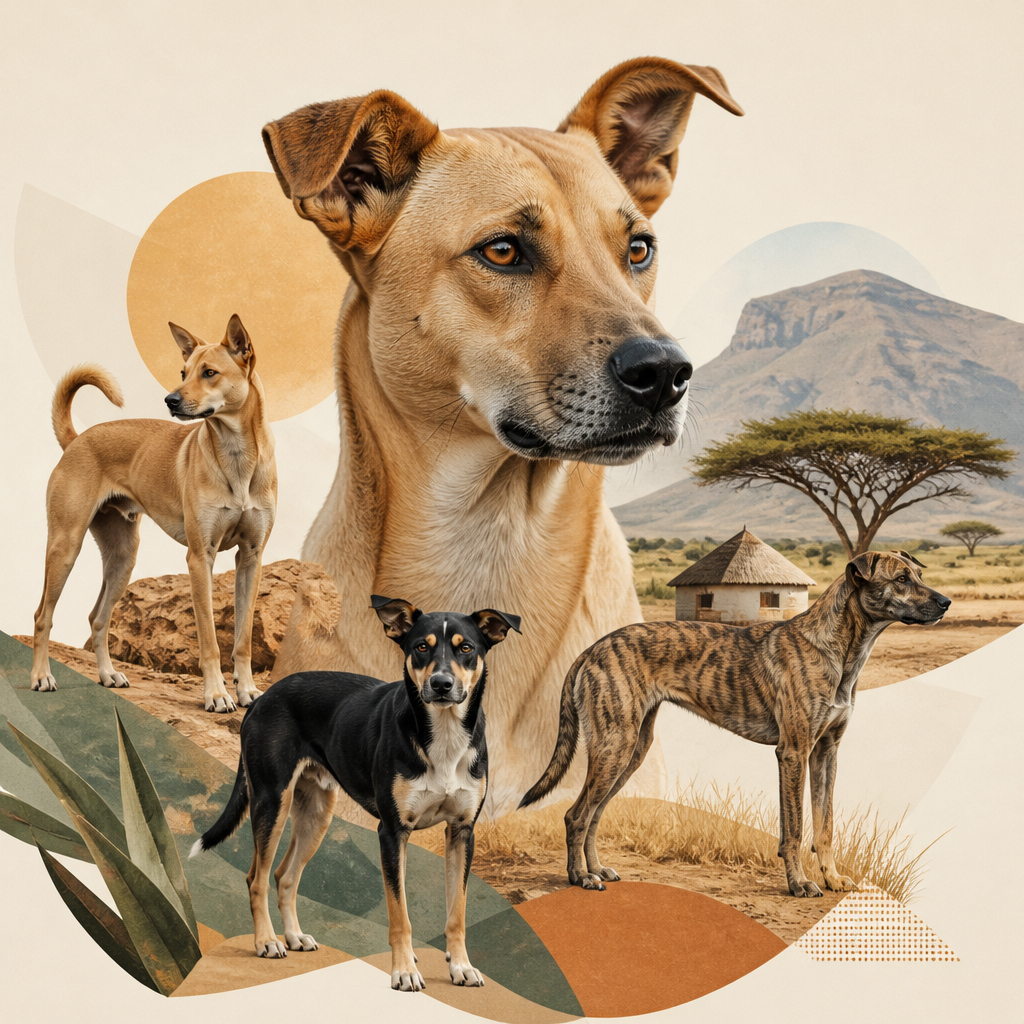
An Africanis is typically a medium-sized dog with a lean, athletic frame. Rather than being broad or heavily built, it is shaped for efficient movement and endurance. The body is usually muscular without looking bulky, with long, capable legs, a deep chest and a light, balanced gait. This is a dog developed through generations of living and working alongside people in varied southern African environments, where stamina, agility and sound physical condition mattered more than a dramatic appearance.
Many Africanis dogs have a short, close-fitting coat that is practical in warm climates and generally easy to care for. Their heads often have a wedge-like shape, tapering gently toward the muzzle, while their faces tend to look bright, thoughtful and alert. Ears may stand upright, sit semi-pricked or fold slightly, depending on the individual. Their tails also vary, though many carry them in a relaxed curve or gentle sweep.
Color is one of the most varied aspects of the Africanis. Dogs may be black, brown, tan, cream, fawn, white, brindle, patched or multicolored, with or without masks, blazes and other markings. A single coat color does not confirm or rule out Africanis heritage.
This variation is important because Africanis is a landrace, not a narrowly standardized show-ring breed. There is no single “correct” look that every dog must match. One Africanis may appear fine-boned and foxlike, while another is sturdier or has a different ear set and coat pattern. What often connects them is their functional, well-proportioned build, alert expression and natural athleticism.
5. Temperament and Life With a Family
Temperament and Life With a Family
Africanis dogs are often described as intelligent, observant and deeply loyal to the people they regard as their own. Their long history alongside households and communities has helped shape dogs that notice changes around them, respond to daily routines and form close bonds with their family. Many are affectionate in a quiet, steady way rather than demanding constant attention, though individual personalities naturally differ.
A well-raised Africanis is commonly watchful around unfamiliar people or situations. This does not automatically mean aggression. Many simply prefer to assess a newcomer before deciding they are comfortable. With thoughtful socialization and kind handling, they can learn to greet visitors calmly and distinguish ordinary activity from something worth alerting their family about.
Early positive experiences matter greatly. Puppies and newly adopted dogs should gradually meet a variety of friendly adults, respectful children and well-matched dogs. Short, enjoyable outings can introduce them to traffic sounds, household appliances, car rides, different surfaces and unfamiliar places. Pairing these experiences with treats, play and reassurance helps build confidence without overwhelming the dog.
Africanis dogs can make rewarding companions for active families that enjoy walks, outdoor time and training together. They tend to do best when included in everyday life rather than left alone for long periods with little to do. A secure garden is useful, but it is not a substitute for shared exercise, exploration and attention.
Calm, consistent guidance suits this thoughtful breed type well. Clear routines, reward-based training and supervised interactions with young children can help an Africanis become a dependable family member. As with any dog, prospective owners should meet the individual animal and consider its background, social skills and energy level, rather than relying on a label alone.
6. Exercise, Training and Everyday Care
Exercise, Training and Everyday Care
Africanis dogs are typically athletic, energetic and alert, so they benefit from regular outlets for both body and mind. Daily walks are a useful foundation, but many will also enjoy secure off-lead play, hiking, fetch, scent games and short training sessions. The exact amount of exercise depends on the individual dog’s age, health and temperament. A young, lively Africanis may need considerably more activity than an older dog or one settling into life after rescue.
Mental exercise matters just as much. Scatter feeding, food puzzles, hide-and-seek games and simple scent work can tap into a dog’s natural curiosity. Training games also build communication between dog and owner. Keep sessions short, upbeat and varied, ending while the dog is still engaged.
Reward-based training is especially effective for this intelligent, observant landrace. Use treats, praise, toys or access to a favorite activity to reinforce desired behavior. Consistency, patience and clear boundaries will produce better long-term results than harsh corrections, which can undermine trust or create anxiety. Early practice with recall, loose-lead walking, settling calmly and polite greetings is valuable.
Everyday care should include a complete, good-quality diet suited to the dog’s life stage and activity level, along with constant access to fresh water. Routine veterinary checks, vaccinations, parasite prevention and dental care are essential, even for dogs known for resilience. Ask a veterinarian for guidance based on local disease risks and the dog’s individual needs.
The Africanis short coat is usually low-maintenance. A weekly brush or rub-down can remove loose hair and keep the coat tidy. Grooming is also a practical health check: look for ticks, skin irritation, cuts, ear debris, overgrown nails or changes in body condition. Regular attention helps small problems get noticed before they become bigger ones.
7. Common Questions, Mixes and Online Confusion
Common Questions, Mixes and Online Confusion
Online searches can make dog research surprisingly confusing, especially when broad breed labels and unrelated terms appear together. One phrase that may come up is an africanis and pitbull mix. This simply describes a dog with possible Africanis heritage and Pit Bull-type ancestry, rather than a predictable, standardized crossbreed.
As with any mixed-breed dog, appearance and personality can vary widely. One individual may be lean, quick and highly alert, while another may be more muscular, playful or people-focused. Size, prey drive, confidence around strangers, dog sociability and exercise needs are shaped by genetics, early experiences and training. It is not safe to assume a dog’s behavior from a label or a photograph alone.
A powerful or energetic mix can be a wonderful companion in the right home, but responsible ownership is essential. Prospective owners should be ready to provide early reward-based training, careful socialization, daily exercise and secure fencing or containment. Teaching calm greetings, reliable recall, loose-lead walking and safe handling from an early age can make a major difference. Owners should also follow local rules concerning dogs that may be identified as Pit Bull-type mixes.
Another odd search phrase, black africanis dragon fruit, has nothing to do with dogs. It refers to a fruit-related search topic that can appear alongside Africanis results because of overlapping keywords. It should not be mistaken for a coat color, bloodline or type of Africanis.
Whether adopting an Africanis, a suspected mix or any rescue dog, focus on the individual animal. Meet the dog where possible, ask about its known background and behavior, and consider whether its activity level and needs suit your household. A thoughtful match matters far more than a fashionable or uncertain label.
8. Final Thoughts: Respecting a Unique African Dog Heritage
The Africanis is far more than an appealing, athletic companion. It is a resilient and intelligent landrace with deep cultural roots in southern Africa, shaped by generations of life alongside local families and communities. Its history is part of what makes it so remarkable, but it should also inspire respect for the dogs themselves as individuals, not simply as a rare or unusual type.
Bringing any dog into a home is a long-term responsibility, and an Africanis needs more than admiration for its heritage. It needs regular exercise, patient reward-based training, nutritious food, preventive healthcare and a safe, secure environment. Just as importantly, it needs companionship, calm guidance and a family prepared to meet its needs throughout its life. A dog’s resilience does not mean it should be expected to cope without proper care.
Anyone interested in adopting an Africanis should seek advice from reputable rescues, animal welfare groups and knowledgeable breed advocates, especially those with direct experience in southern Africa. These contacts may help prospective owners understand a dog’s known background, energy level, social needs and suitability for family life. Adoption can also be a meaningful way to support dogs that need stable, loving homes.
Learning about the Africanis offers a window into a living part of southern African history. By choosing thoughtfully and caring responsibly, owners can honor both the individual dog at their side and the heritage it represents. The clear takeaway is simple: respect the Africanis for its history, meet its needs with commitment, and it can be a loyal companion for years to come.