Small European Dog Breeds That Can Thrive in Apartment Life, Even With Cats
Discover small European dog breeds that suit apartment life, from Cavaliers to Dachshunds, with practical tips for peaceful cat introductions.
Why Small European Dogs Are Popular Apartment Companions
Why Small European Dogs Are Popular Apartment Companions
A small dog can make an apartment feel more like home, bringing companionship, comic moments and a reason to step outside each day. For many people, small dogs fit naturally into apartment living: they take up less physical space, are easier to carry or transport, and can often join their owners on visits, holidays and café trips more easily than larger breeds. Their compact size does not mean a compact personality, either. Many are bright, affectionate, bold and wonderfully entertaining.
Still, choosing a dog for a flat involves more than checking its height and weight. A tiny dog that barks at every hallway sound, needs hours of intense activity or struggles to relax indoors may be harder to live with than a larger, calm dog. Exercise needs, trainability, grooming, tolerance of being alone and the ability to settle after a walk all matter. In close quarters, good manners and a predictable routine are especially valuable.
For cat-loving households, breed reputation is only part of the picture. The best possible match depends on the individual dog’s temperament, early socialisation and history around other animals. Even a gentle dog needs a slow, carefully managed introduction to a resident cat, with safe spaces and supervision while both pets learn to coexist.
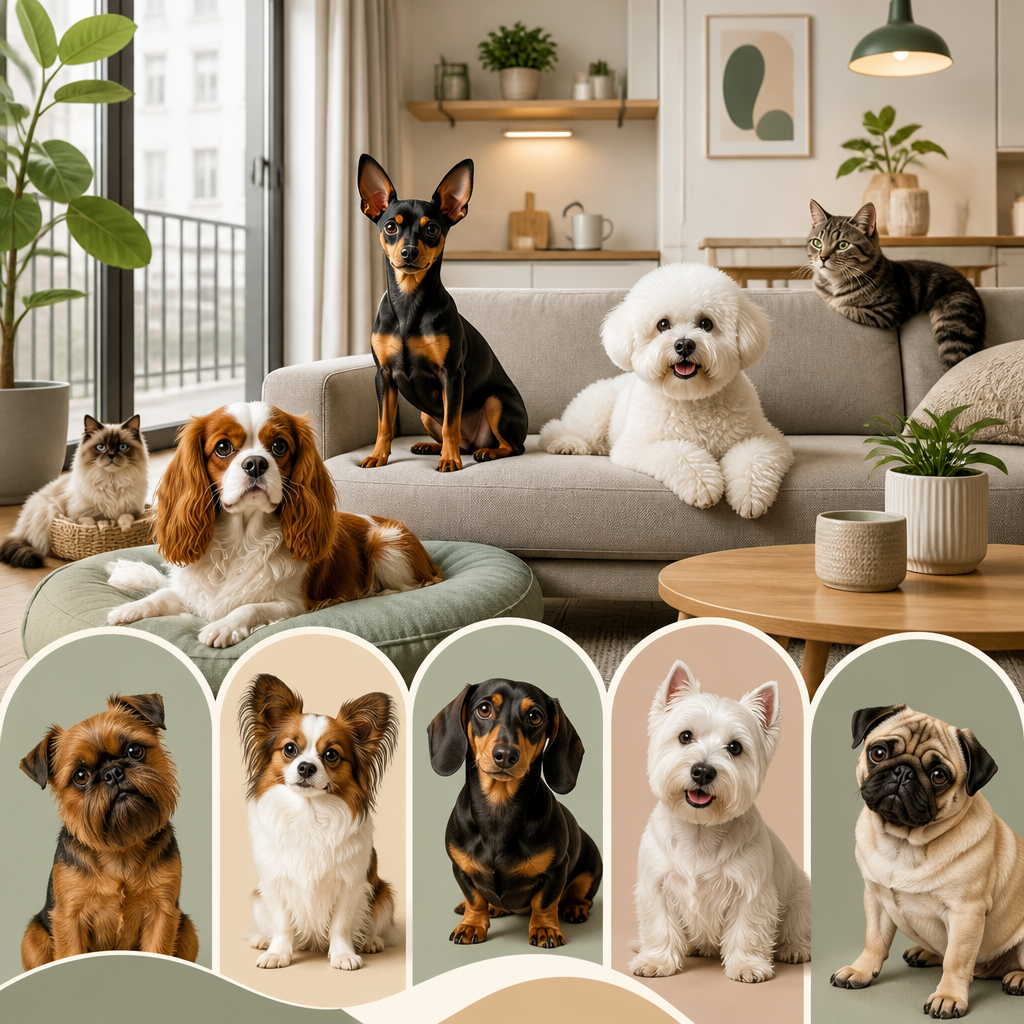
This guide looks at several appealing European breeds for apartment homes. There are cheerful, people-focused Bichons and Maltese, the soft-natured Cavalier King Charles Spaniel, and the distinctive French Bulldog. It also covers elegant Papillons, sociable Havanese and Pugs, plus the sturdy little Miniature Dachshund, whose big character needs thoughtful guidance. Each can be a rewarding companion, provided its needs suit your home and daily life.
What Makes a Dog Suitable for Apartment Living?
What Makes a Dog Suitable for Apartment Living?
A dog’s adult size matters in a flat, but it is only one part of the picture. Small dogs need less physical room than large breeds, yet a tiny, highly active dog that barks at every hallway sound may be harder to live with than a larger, calm companion. Look at likely barking tendencies, daily exercise needs, grooming demands, trainability and how comfortably a dog can spend short periods alone.
Exercise is not limited to distance walked. Dogs also need mental enrichment to feel settled at home. Sniffing on walks, short reward-based training sessions, food puzzles and scatter feeding give a dog useful outlets for its brain and natural behaviours. This can help reduce boredom-related behaviours, such as excessive barking, chewing or restless pacing. Even energetic European breeds can adapt well to apartment living when their physical and mental needs are met consistently.
Your practical surroundings deserve equal attention. Check your building’s pet rules, including restrictions on size, breed or the number of animals allowed. Lift access can be important for older dogs or breeds prone to joint and back problems, while safe nearby green space makes daily toilet breaks and walks much easier. Consider your work schedule honestly, too. A sociable dog may struggle if left alone for long days without support from household members, a dog walker or day care.
If you rent, confirm that your landlord allows pets before bringing a dog home, and keep any agreement in writing. It is also worth thinking about neighbours, shared entrances and thin walls.
Ultimately, the best apartment dog is not necessarily the smallest one. A calm, well-trained dog that can relax indoors, cope with routine changes and respond politely around people and other pets is usually a far better neighbour than a tiny dog with endless energy or frequent barking.
Cavalier King Charles Spaniel: The Gentle British Roommate
Cavalier King Charles Spaniel: The Gentle British Roommate
The Cavalier King Charles Spaniel is an affectionate British breed with a reputation for a soft, friendly nature. Small without being especially fragile, these dogs often adapt well to life in a flat when they are included in everyday family activities. They tend to love company, whether that means following their person from room to room, greeting visitors or settling beside someone on the sofa.
For apartment living, the Cavalier has several appealing qualities. Most need regular daily walks and opportunities to sniff, explore and play, but they do not usually require the intense exercise schedule of a working breed. A couple of sensible walks, short training sessions and indoor games can meet the needs of many adult Cavaliers. Afterwards, they are often very happy to curl up for a long cuddle. Their manageable size also makes journeys through shared hallways, lifts and public transport easier.
Many Cavaliers can live peacefully with cats, particularly if they have been socialised with them from an early age. Their companion-dog background often means they are more interested in being near the household than in chasing it. Still, every dog is an individual. Introduce a new Cavalier slowly, use a baby gate at first, and make sure the cat has elevated, dog-free places to retreat. Reward calm behaviour and never force close contact before both animals seem comfortable.
Prospective owners should also look carefully at health. Cavaliers can be prone to inherited heart disease, especially mitral valve disease, along with other potentially serious concerns. Choose breeders who carry out relevant health tests and can discuss results openly, or consider working with a reputable rescue that can provide clear veterinary and temperament information.
French Bulldog: A Compact Companion With Important Care Needs
French Bulldog: A Compact Companion With Important Care Needs
The French Bulldog is one of the most recognisable small European breeds, loved for its bat-like ears, expressive face and delightfully comic personality. Often called a Frenchie, this compact companion tends to form close attachments to its people and is usually happiest when included in everyday home life.
For apartment living, French Bulldogs have some clear advantages. They do not generally need long runs or hours of outdoor activity. A couple of gentle, well-timed walks, short indoor play sessions and plenty of company may suit many adult Frenchies well. They are often content to curl up beside their owner after a little activity, which can make them appealing to people in smaller homes.
However, their low exercise needs come with an important welfare consideration. French Bulldogs are flat-faced, or brachycephalic, dogs, and many have breathing difficulties linked to their body shape. They can struggle in warm weather, during vigorous exercise or when stressed. Owners should keep walks short and calm on hot days, provide a cool indoor space, maintain a healthy weight and seek veterinary advice if their dog snores heavily, tires quickly or shows signs of breathing distress. Responsible breeding matters greatly, so avoid breeders who prioritise extreme features over health.
Frenchies can live with cats, but their compatibility is not automatic. Some are easy-going and quickly accept a feline housemate, while others may be overly enthusiastic, playful or inclined to chase. Introduce them gradually, reward calm behaviour and make sure the cat has high shelves, gated rooms or other dog-free retreats. Supervised meetings and separate feeding areas help both pets settle safely.
Bichon Frise and Maltese: Cheerful, Cat-Friendly Lap Dogs
Bichon Frise and Maltese: Cheerful, Cat-Friendly Lap Dogs
The Bichon Frise and Maltese are classic companion dogs with long European histories and plenty of appeal for apartment households. The Bichon Frise has Mediterranean connections, while the Maltese is among the oldest small companion breeds, with a history stretching back thousands of years. Both are small dogs bred primarily to live closely with people, rather than to work long hours outdoors.
Their compact size, sociable nature and manageable exercise needs can make them strong candidates for apartment living. Neither breed needs a large garden to be happy, although both still benefit from daily walks, short play sessions and chances to explore new smells. They are often lively indoors, but their playful energy can usually be channelled into gentle games, training exercises and toys. Both also tend to form close bonds with their families, so they are best suited to homes where someone is around for much of the day.
Their fluffy appearance comes with a commitment. Bichons and Maltese are often described as low-shedding, which may mean less loose hair around the flat, but it does not mean low-maintenance grooming. Their coats need frequent brushing to prevent knots and matting, plus regular professional grooming. Face cleaning may also be needed, particularly around the eyes.
For homes with cats, their generally gentle, people-focused temperaments can be encouraging. Many can learn to share space calmly with a confident cat, especially when socialised early. Still, a bouncy young dog may see a moving cat as an invitation to play or chase. Redirect this behaviour promptly with reward-based training, and give the cat reliable escape routes, high perches and peaceful areas of its own.
Miniature Dachshund: Big Personality in a Small Package
Miniature Dachshund: Big Personality in a Small Package
The Miniature Dachshund is a small German breed with an outsized presence. Originally developed to work underground and follow scent, this short-legged dog is often bold, curious and remarkably confident for its size. Smooth-, long- and wire-haired varieties differ slightly in coat care and character, but most share the breed’s lively spirit and strong opinions.
A Miniature Dachshund can adapt well to apartment living when its daily needs are met. Regular walks, gentle play and scent-based games, such as scattering part of a meal for the dog to find, give it a useful outlet for its natural instincts. Positive, consistent training matters too. Dachshunds are clever, but they can also be stubborn, and some are quick to sound the alarm at hallway noises, visitors or passing dogs. In a building with close neighbours, early work on recall, settling and quiet behaviour is particularly valuable.
Their long backs require thoughtful care. Dachshunds have a higher risk of intervertebral disc disease and other back problems, so keeping them lean is essential. Repeated jumping on and off sofas, beds or stairs can also place strain on the spine. Ramps, sensible home layouts and vet-approved exercise routines can help protect their mobility.
Cat compatibility needs an honest assessment. A calm individual Dachshund may learn to live peacefully with a cat, especially after careful socialisation, but the breed’s hunting background can make chasing more likely. Never assume that a small dog is automatically safe with cats. Use slow, supervised introductions, reward calm behaviour and provide cat-only retreat areas, including high shelves or rooms behind a secure baby gate.