Are Karelian Bear Dogs Good With Cats?
Discover the fearless Karelian Bear Dog, from its wildlife-working roots to its strong prey drive and what cat parents should know before bringing one home.
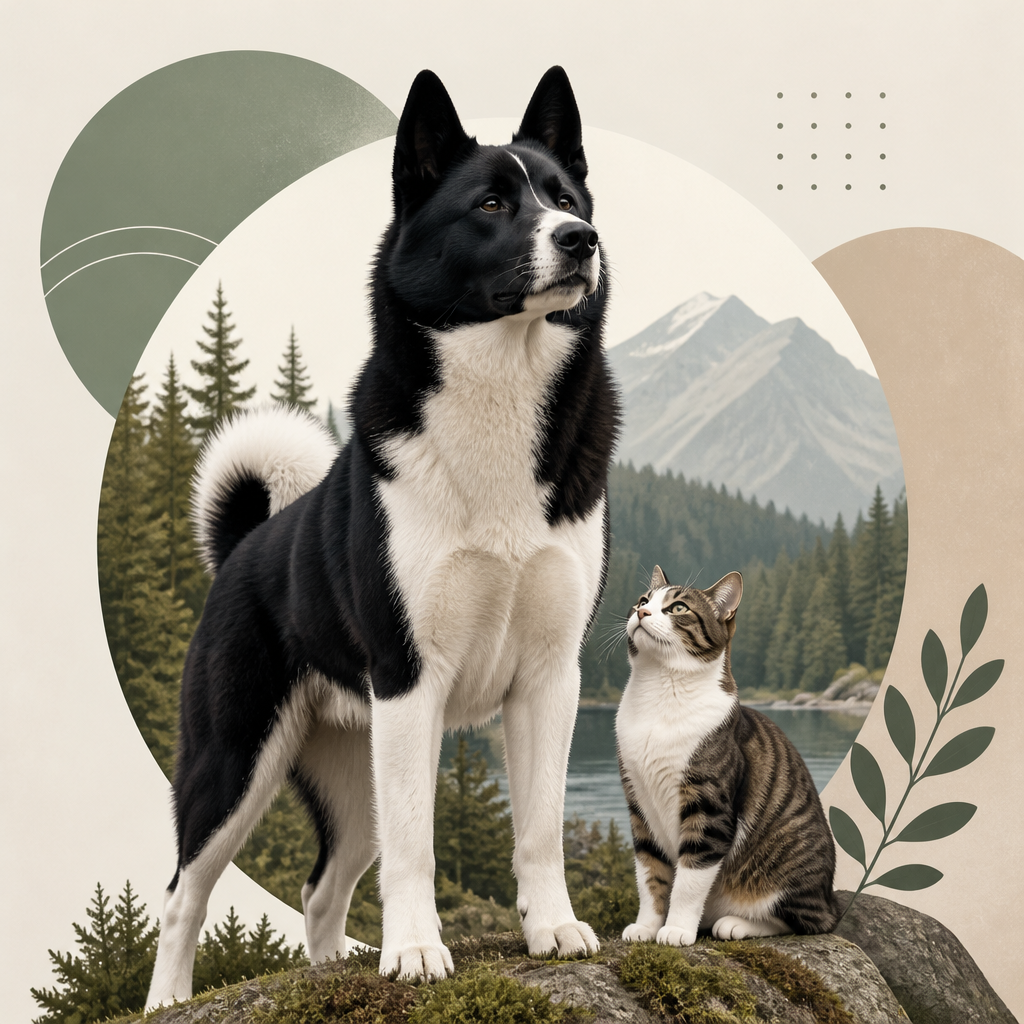
Meet the Karelian Bear Dog
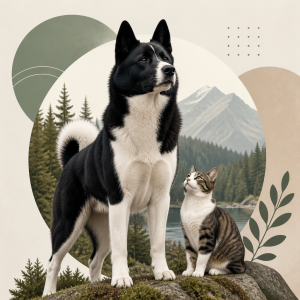
With its sharp, foxlike face, pricked ears, curled tail, and crisp black-and-white coat, the Karelian Bear Dog looks as though it stepped out of a Nordic forest folklore tale. This striking Finnish breed has an equally memorable personality: bold, intensely alert, and built to work independently in rugged country. It is a dog with a serious purpose behind its beautiful appearance.
The Karelian Bear Dog is not usually a typical family pet breed. These dogs were developed for demanding outdoor work, and many still carry the stamina, confidence, vocal nature, and powerful instincts that made them valuable hunting partners for generations. They tend to need more training, activity, structure, and careful management than the average companion dog. For the right experienced household, those traits can be deeply rewarding. For an unprepared home, they can be a real challenge.
Still, this is a breed worth knowing about, even for animal lovers who would never plan to bring one home. Karelian Bear Dogs have a remarkable history, a distinctive relationship with wildlife, and a modern role that can help people and bears avoid dangerous conflicts. Their courage is legendary, but it is only one part of a complex temperament shaped by centuries of selective breeding.
For cat parents, that background matters. A dog bred to notice, pursue, and confront wildlife may not automatically be a safe match for a feline housemate. Some Karelian Bear Dogs can live calmly with resident cats, particularly with thoughtful introductions and lifelong management. Others may find a cat’s quick movement too difficult to ignore.
This article looks at where the breed came from, what drives its behavior, how its prey instincts affect cat households, and what it takes to determine whether a Karelian Bear Dog can safely share a home with cats.
A Nordic Working Dog With Ancient Roots
In the forests and rural communities of Finland and the broader Karelia region, people relied on tough, resourceful dogs long before modern breeds were formally defined. The Karelian Bear Dog developed from northern spitz-type hunting dogs that helped families locate game, alert people to danger, and watch over remote homesteads where wild animals were a fact of daily life.
Its roots are ancient, although the modern breed was more formally established in Finland during the 20th century. Generations of selective breeding favored dogs that could travel over difficult ground, work in harsh weather, and stay focused far from their handler. A dog hunting in dense forest could not wait for constant instructions, so independence was an essential trait, not a flaw.
Karelian Bear Dogs were bred for stamina, sharp awareness, and the confidence to stand their ground when confronted with dangerous wildlife. Their role called for an intense, clear-headed dog that could locate an animal and signal its presence with persistent barking, while remaining agile enough to navigate rugged terrain.
Physically, the breed is medium-sized but strongly built, with an athletic body designed for endurance rather than bulk. Its alert, erect ears and bright expression give it a distinctly foxlike look. The tail typically curls over the back, another familiar spitz characteristic. Traditionally, the coat is black with clearly defined white markings, often on the chest, neck, face, legs, and tail tip. This striking contrast makes the Karelian Bear Dog easy to recognize, but it is the breed’s working mind, courage, and determination that truly reflect its northern heritage.
Why Is It Called a Bear Dog?
Why Is It Called a Bear Dog?
The name is not just a dramatic label. The Karelian Bear Dog can hunt a wide variety of prey, of all sizes. However, it is their fearlessness against bear, both on a hunt and as a protector for which it gets its name. In its traditional Nordic role, this dog helped hunters find large game, including bears, moose, and wild boar, often across difficult terrain and in harsh weather.
A Karelian Bear Dog was not expected to wrestle or defeat a bear. Its job was generally to locate the animal, then bark intensely and persistently while moving with agility around it. This focused behavior could hold the animal’s attention and help keep it in one place long enough for the handler to arrive. The dog’s sharp bark, confidence, and willingness to work at a distance made it especially valuable in this role.
That said, “fearless” should never be mistaken for invincible. Bears and other large wild animals are powerful, unpredictable, and capable of seriously injuring or killing a dog. Bear work is highly specialized, not an activity for an untrained pet or an inexperienced owner. It requires skilled handlers, careful training, established safety protocols, and local wildlife knowledge.
For modern owners, the breed’s history is a reminder of just how strong its instincts can be. A Karelian Bear Dog may notice wildlife long before a person does, react quickly to movement or scent, and persist when interested in an animal. Those qualities are remarkable in a working setting, but they also mean secure handling and thoughtful management are essential in everyday life.
From Hunting Heritage to Modern Wildlife Conservation
From Hunting Heritage to Modern Wildlife Conservation
The same courage, stamina, and intense focus that once made Karelian Bear Dogs valued hunting partners have also given them an important modern job: helping people and wildlife coexist more safely. Rather than harming bears, trained dogs and their handlers can use the breed’s confident presence and persistent barking to teach wildlife that human-use areas are not welcoming places to linger.
Today it is commonly used to help with bear control in wilderness areas, such as national parks, in both the United States and Canada. Wildlife professionals may deploy trained Karelian Bear Dogs to haze bears away from campgrounds, neighborhoods, unsecured garbage, orchards, livestock areas, and other places where bears can become accustomed to finding food near people.
In this work, the dog is not expected to fight a bear. Instead, it typically works at a controlled distance, often on a lead, barking and moving with its handler to create an unpleasant encounter. The goal is to encourage the bear to leave and avoid returning, reducing the chances of dangerous human-wildlife conflict. Used as part of a broader strategy that includes secure food storage, garbage management, public education, and monitoring, these dogs can support nonlethal conservation efforts.
It is vital to remember that this is specialized work, not something to copy with a household pet. Never try to haze, chase, or approach a bear or any other wild animal with your dog. Even a brave, well-trained dog can be injured, and a frightened or defensive wild animal may endanger the dog, its handler, and nearby people. Wildlife encounters should always be handled according to local guidance and, when needed, by trained professionals.
Temperament: Smart, Loyal, Vocal, and Very Independent
Temperament: Smart, Loyal, Vocal, and Very Independent
Karelian Bear Dogs are intensely alert, courageous, and intelligent. They tend to form strong bonds with their families and can be deeply loyal to the people they know well. At the same time, they are often naturally reserved with strangers. That does not necessarily mean they are unfriendly, but they are not typically the type to greet every new person with instant enthusiasm.
Their working background shaped a particularly independent mind. Historically, these dogs needed to locate game and make fast decisions some distance from their handler, often in challenging terrain. In a home setting, that can look like a dog that pauses to consider whether a cue is worth following, rather than one that automatically obeys. They are capable learners, but intelligence should not be confused with an eager-to-please temperament.
Many Karelian Bear Dogs are also vocal. Barking was an important part of their original work, helping alert a handler and keep an animal’s attention at a distance. A modern dog may bark when it spots wildlife, hears unfamiliar sounds, notices visitors, or sees activity near its yard. Without thoughtful management, that watchful nature can become exhausting for both the household and nearby neighbors.
Early, positive socialization is essential. Puppies should have carefully managed, pleasant exposure to people, dogs, sounds, surfaces, and everyday routines, without overwhelming them. Reward-based training can build communication and cooperation, especially when sessions are short, consistent, and worthwhile for the dog.
Still, prospective owners should have realistic expectations. This is not usually an easygoing, highly social breed that fits effortlessly into every home. A Karelian Bear Dog thrives with experienced guidance, clear boundaries, and an owner who respects its instincts rather than expecting training to erase them.
Can a Karelian Bear Dog Live With Cats?
Can a Karelian Bear Dog Live With Cats?
Possibly, but it should never be taken for granted. Some Karelian Bear Dogs can live peacefully with a resident cat, particularly if they were raised together from puppyhood and introductions were handled carefully. Even then, this is a breed developed to notice, pursue, and confront animals, so its strong prey drive remains an important consideration.
A dog that calmly accepts one familiar cat in its own home may still chase an unfamiliar cat outdoors. Household familiarity is not the same as broad cat-friendliness, and owners should not assume a successful indoor relationship means the dog is safe around every cat it encounters.
Introductions should be slow, structured, and centered on the cat’s comfort. Begin with scent swapping, such as exchanging bedding, before allowing visual contact through a secure barrier like a baby gate. Keep early meetings brief and supervised, with the dog on leash if needed. The cat should always have clear escape routes, high resting places, and access to dog-free rooms. Feed pets separately, and keep litter boxes where the dog cannot reach them.
Cats should not be left alone with a Karelian Bear Dog until there is a long, reliable history of calm behavior, and even then, some households may decide that permanent separation is the safest choice. Watch closely for hard staring, stalking, lunging, chasing, or an inability to disengage from the cat. These are signs that the arrangement needs more management, not more chances.
For prospective owners with cats, an adult dog with a documented record of living safely with cats may be a more predictable choice than a puppy. Before bringing the animals together, consider consulting a qualified trainer or behavior professional who has experience with prey-driven dogs and multi-pet homes.
Daily Care: Exercise, Enrichment, and Secure Spaces
Daily Care: Exercise, Enrichment, and Secure Spaces
A Karelian Bear Dog needs substantial daily activity, but simply giving one hours of free running is not enough. This is a sharp, driven working breed that also needs a job for its brain. Without appropriate outlets, its energy and watchfulness can turn into excessive barking, escape attempts, or intense fixation on squirrels, neighborhood cats, and other moving animals.
Structured activities are especially useful. Scent games, tracking, obedience practice, rally, and long hikes can provide both physical exercise and mental challenge. Carefully managed exploration in safe, legal locations also gives these dogs a chance to use their natural senses. Keep wildlife safety in mind, though: this breed may spot and pursue an animal in an instant.
Secure management is essential. Use sturdy fencing that is regularly checked for weak spots, reliable leashes and harnesses, and careful door routines. A Karelian Bear Dog should not be trusted off leash in unfenced areas simply because it knows basic commands. Its instinct to chase can overpower training when wildlife appears.
In a cat household, set up the environment for success. Keep litter boxes and cat food where the dog cannot reach them, and give the cat one or more dog-free rooms with elevated resting places and easy escape routes. Enrichment for the dog, including food puzzles and supervised scent work, can help reduce boredom-driven attention toward the cat, but it is not a substitute for supervision and separation when needed.
Their dense double coat benefits from regular brushing, particularly during seasonal shedding. Routine nail trims, dental care, and veterinary visits matter, too. Prospective owners should also ask responsible breeders about breed-appropriate health screening and the health history of the dog’s parents.
Is This Fearless Breed Right for Your Household?
Is This Fearless Breed Right for Your Household?
The Karelian Bear Dog is an extraordinary breed, shaped by generations of demanding work in the Nordic wilderness. Its courage, sharp senses, persistence, and distinctive voice have made it valuable to hunters historically and to modern wildlife professionals working to prevent conflicts between bears and people. This is a dog with a remarkable purpose, not simply a striking black-and-white companion.
That same heritage also means the breed is not the right fit for every household. Karelian Bear Dogs tend to do best with experienced, active owners who enjoy ongoing training and understand how to manage an independent dog with intense instincts. They need secure containment, meaningful daily activity, and consistent handling that is patient, positive, and realistic. A fenced yard alone will not meet the needs of a dog bred to notice, pursue, and respond to wildlife.
For cat parents, the most important consideration is the resident cat’s safety and comfort. While some individual Karelian Bear Dogs can coexist peacefully with cats, especially cats they have known since puppyhood, training cannot erase inherited prey drive. A dog that behaves calmly around one household cat may still react strongly to a cat running outdoors or an unfamiliar feline visitor. Some homes can make the arrangement work through careful introductions, supervision, and permanent management. In others, keeping the animals separate is the kindest and safest choice.
The Karelian Bear Dog deserves admiration for its bold history and its continuing conservation work. But the best canine companion is one whose exercise needs, instincts, and temperament genuinely suit your home, lifestyle, and feline family members.